

The honest, no-science-degree-required guide to using lactic acid for skin from someone who was terrified of putting acid on her face and now can’t imagine her routine without it.
Can I tell you something embarrassing?
The first time I bought a lactic acid product I kept it on my bathroom shelf for three weeks without opening it. Just sitting there. Staring at me. Because even though I’d done my research and read all the right things about how gentle it was and how everyone’s skin loved it — the word acid was doing something to my brain that no amount of reassuring blog posts could fix.
Acid. On my face. On purpose.
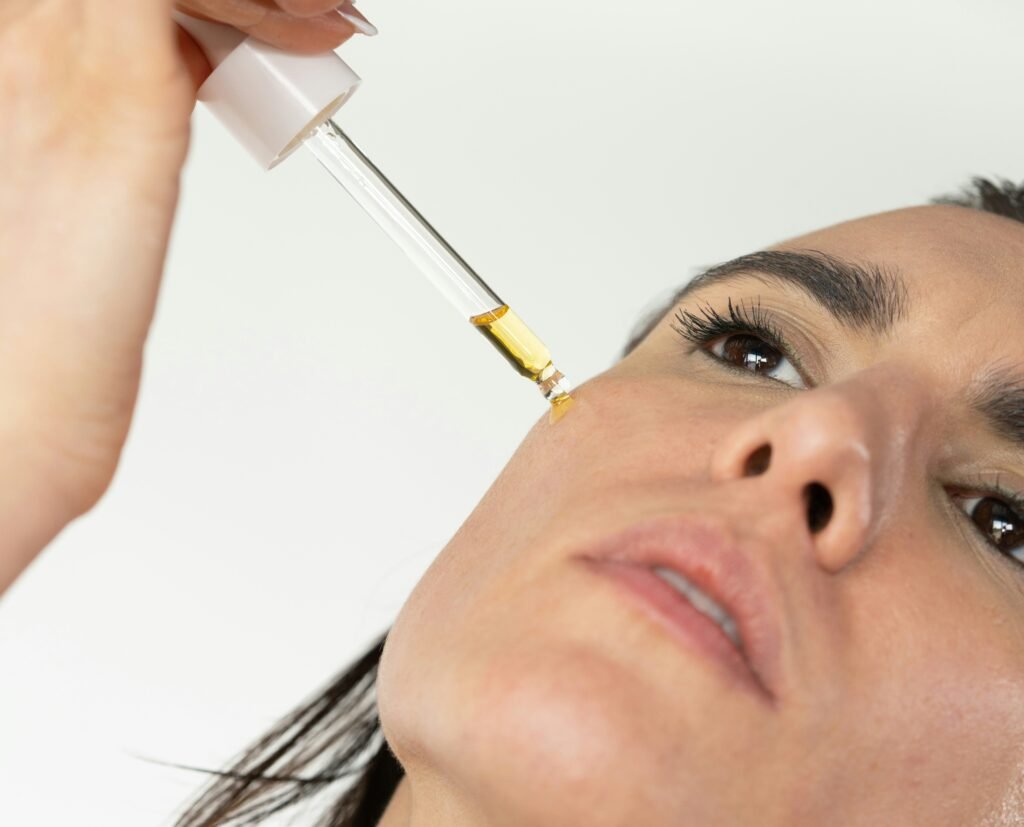
It took a friend physically watching me apply it for the first time for me to actually do it. I held my breath. I waited for burning. Nothing happened. My skin felt slightly tingly for about thirty seconds and then completely normal. And then the next morning I woke up and my skin looked like I’d had a really good night’s sleep, which I hadn’t.
That was two years ago. I now use lactic acid three times a week without thinking twice about it, and it has done more for my skin texture and tone than anything else in my routine — including products that cost five times as much.
This is the guide I needed before I started. Not the clinical version full of ingredient percentages and pH levels. The real one — what it actually feels like, what mistakes I made, what to expect week by week, and who it’s genuinely right for.
So What Actually Is Lactic Acid?
Here’s the plain English version — no chemistry degree required.
Lactic acid is a type of exfoliant that works chemically rather than physically. Instead of a scrub that buffs dead skin cells off the surface, lactic acid dissolves the invisible glue that holds those dead cells together, so they shed naturally and reveal the fresher, smoother skin underneath.
It comes originally from milk — which is why Cleopatra was apparently bathing in sour milk thousands of years ago and looking incredible in all her paintings. Most skincare products use a lab-made version today, which is both more stable and more consistent in what it delivers.
What makes lactic acid different from other exfoliating acids is that it also acts as a humectant — which means it pulls moisture into the skin while it’s working. So unlike some exfoliants that leave your skin tight or stripped, lactic acid exfoliates and hydrates at the same time. That’s genuinely unusual and genuinely useful.
It’s also a larger molecule than most other acids in its family, which means it works closer to the surface and is less likely to irritate the deeper layers of your skin. That’s the reason it’s considered the gentlest entry point into the world of chemical exfoliation and the one most skin types can tolerate, including sensitive.
What Lactic Acid for Skin Actually Does
Let me tell you what I noticed — not what a brand website says you’ll notice.
The texture thing happens first. Within the first week of using it consistently my skin felt different when I touched it. Smoother. Like the rough, slightly bumpy feeling across my forehead had just… softened. I kept running my fingers across my cheek and thinking something felt different but I couldn’t immediately see it yet.
Then the glow shows up. By week three or four I was getting the “you look rested” comments that you get when something in your skin has actually shifted. My skin wasn’t shinier — it was more reflective in that healthy way that makes you look like you’ve been drinking enough water and sleeping eight hours. I was doing neither of those things.
Dark spots started fading. I had two spots on my cheek from breakouts earlier in the year that had been sitting there stubbornly for months. By week six they were noticeably lighter. Not gone entirely, but lighter enough that I stopped reaching for as much concealer every morning.
My makeup started looking better. This was the one I didn’t expect. When the surface of your skin is properly exfoliated, foundation glides on differently. It sits more evenly, it doesn’t cling to dry patches, and it lasts longer throughout the day. I got more compliments on my makeup during the first month of using lactic acid than I ever had before, and I hadn’t changed a single makeup product.
Fine lines looked softer. Over several months of consistent use the lines around my eyes and across my forehead became less visible. Not erased — I want to be realistic with you — but noticeably softer in a way that felt like my skin was plumper and more elastic overall.
Who It’s Actually For — By Skin Type
Most guides say “lactic acid works for all skin types” and then stop there. That’s not helpful. Here’s what I’d actually tell you based on skin type:
Dry skin: This is where lactic acid really shines. The combination of exfoliation and hydration is exactly what dry skin needs — it removes the dead, flakey layer that sits on top and stops your moisturizer from actually penetrating, while simultaneously drawing moisture into the skin. If your moisturizer never seems to do enough, this is probably why and this is probably the fix.
Sensitive skin: Start low and slow. A 5% concentration in a leave-on formula, two nights a week maximum to begin. Give your skin four weeks to adjust before you increase frequency. The first few uses might bring some flushing or tingling — that’s normal and should settle quickly. If you’re still red twenty minutes after applying, that product might be too strong for you right now.
Oily or acne-prone skin: Lactic acid helps clear the dead skin cells that clog pores and contribute to breakouts. It won’t dry your skin out the way some acne treatments do, which means it’s less likely to trigger the overcompensation cycle where your skin produces more oil because it’s been stripped. Just be aware there may be a purging period — more on that in a minute.
Combination skin: Use it on your whole face. Your dry patches will benefit from the hydration, your oily zones will benefit from the exfoliation. It’s one of the rare ingredients that genuinely addresses both ends of the combination skin spectrum at the same time.
Mature or aging skin: The firmness and collagen support that comes with consistent long-term lactic acid use is genuinely meaningful for mature skin. It’s not dramatic and it’s not instant, but over months of use the quality of your skin — the plumpness, the elasticity, the overall clarity — improves in ways that are visible to other people, not just in your own bathroom mirror.
Darker skin tones: Lactic acid is one of the most recommended exfoliants specifically for darker skin tones because of how gentle it is. Post-inflammatory hyperpigmentation — the dark marks that breakouts leave behind — is something lactic acid addresses particularly well, and it does it without the irritation risk that some stronger acids carry which can actually make hyperpigmentation worse.Because formulation matters when treating hyperpigmentation, choosing the right brand is essential. Check out our guide to the top luxury skincare products to find high-end formulas designed to safely brighten skin.
How to Use Lactic Acid Effectively

The Concentration Guide That Actually Makes Sense
Every article tells you to “look for the right concentration” without telling you what that means for a real person. Here’s how I’d break it down:
5% and under: Perfect starting point. Gentle enough for daily use once your skin adjusts. Good for sensitive skin, beginners, or anyone who has reacted badly to exfoliants before. This is where I started and where I’d tell anyone nervous to start.
5-10%: The sweet spot for most people. Noticeable results without unnecessary aggression. Most well-known lactic acid products — including the ones that have become cult favorites in the skincare world — sit in this range.
10-15%: More targeted treatment level. Good for established lactic acid users dealing with specific concerns like stubborn dark spots or significant texture issues. Not where you start. Where you graduate to after a few months of the lower concentrations.
Above 15%: Professional peel territory. This is what happens in a dermatologist or esthetician’s office. Not something you should be using at home unsupervised, especially not to start.
How to Actually Use It — Step by Step
I made a lot of mistakes when I started and I want to save you from all of them.
When to use it: Nighttime. Always nighttime. Exfoliating removes the outer layer of skin which makes it more vulnerable to sun damage during the day. You do this at night, you sleep on it, you apply SPF the next morning. That’s the sequence. Non-negotiable.
How often to start: Two nights a week for the first month. Not every night. Not even every other night. Two nights a week, then assess how your skin feels, then slowly increase if everything looks good.
The right order in your routine: Cleanse your face. Pat dry. Apply your lactic acid on clean, dry skin. Wait five to ten minutes. Then apply your moisturizer on top. That’s it. The waiting matters — it gives the acid time to do its work before you dilute it with other products.
What to layer it with: Hyaluronic acid and ceramide-based moisturizers are your best friends after lactic acid. They reinforce the hydration it’s already pulling into your skin and support the barrier while it’s adjusting.
What NOT to layer it with on the same night:
- Retinol — too much for one night, you will regret it
- Vitamin C — same thing, different mechanism, still too much
- Other AHAs or BHAs — no, just no, not at the same time
- Any other active treatment — give your skin one thing to process at a time
You can use these other actives in your routine — just not on the same nights as your lactic acid. Alternate them. Your skin is not a science experiment.
The Complete Routine Using Lactic Acid
Nights you use lactic acid:
Cleanse → Pat dry → Lactic acid → Wait 5-10 minutes → Moisturizer → Sleep → SPF next morning
Nights you don’t use lactic acid:
Cleanse → Hyaluronic acid serum → Moisturizer → (Optional: retinol or vitamin C on alternating nights)
Morning every day:
Gentle cleanser → Moisturizer → SPF — this never changes, especially when you’re exfoliating at night
The Purging Conversation Nobody Has With You Honestly
This is the one thing that makes people give up on lactic acid before it’s had a chance to work and I want to address it properly.
When you first start exfoliating consistently, your skin may purge. This means breakouts — sometimes more than you had before you started. And it feels like the product is making things worse.
It’s not. Here’s what’s actually happening. Lactic acid is speeding up the rate at which your skin turns over, which means congestion that was sitting deep in your pores and would have become a breakout in four weeks is now becoming a breakout in one week. It was coming regardless. The acid just fast-forwarded the timeline.
Purging typically lasts two to four weeks. It happens in the areas where you normally break out — not randomly across new areas of your face. The breakouts are usually smaller and resolve faster than your normal breakouts.
If you’re breaking out in brand new places or if the breakouts are large, painful, and not resolving — that’s a reaction, not a purge, and you should stop using the product and give your skin a break.
The difference matters and knowing it is the difference between pushing through to results and giving up two weeks before your skin was about to turn a corner.
My Personal Experience & Results
My Personal Week-by-Week Results Timeline
Because nobody ever tells you this and I was desperate to know when to expect something:
Week 1: Skin feels slightly smoother to the touch. No visible changes yet. Don’t panic and don’t give up.
Week 2: The glow starts. Not dramatic but your skin looks more awake. You’ll notice it in the morning light.
Week 3-4: Texture is noticeably better. Makeup applies differently. People start saying you look well-rested.
Week 5-6: Dark spots start fading. Pores look smaller because the dead skin buildup around them has cleared.
Week 7-8: The results feel established now. This is your new normal — and it’s meaningfully better than where you started.
Month 3 and beyond: Long-term firmness and collagen improvement starts showing up. Skin feels thicker and more resilient in a good way.
My Biggest Mistakes (So You Don’t Have To Make Them)
I used it too often too soon. Three nights a week in my first week because I was impatient. My skin got red and irritated and I panicked and stopped for two weeks entirely. Start at two nights a week and stay there for a full month.
I skipped SPF the next morning. I know. I know. But there were mornings I was in a rush and I skipped it. And by week three I had a new dark spot that hadn’t been there before. Exfoliation makes your skin more vulnerable to sun damage. SPF is not optional when you’re using lactic acid. It’s part of the treatment.
I layered it with retinol on the same night. Once. The next morning my face looked like I’d been crying for six hours and hadn’t slept in four days. My skin was red, irritated, and angry for three days. Never again. Pick one active per night and stick with it.
I expected results in five days. Skincare doesn’t work like that. Nothing works like that. Give any new ingredient a minimum of four weeks before you decide it’s not working for you.
Signs Lactic Acid Is Working
Because sometimes you need someone to tell you you’re on the right track:
- Your skin feels smoother than usual when you touch it in the morning
- Your moisturizer seems to absorb faster and work better
- Your foundation applies more evenly
- The rough patches you had are getting softer
- Dark spots are gradually fading — slowly but you can see it in photos
- People ask if you’ve done something different or tell you your skin looks good
Signs Something Is Wrong
Stop using it and give your skin a week off if you notice:
- Persistent redness that doesn’t fade within thirty minutes of applying
- Burning that doesn’t settle down quickly
- New breakouts in areas where you’ve never broken out before
- Skin that feels raw, painful, or tight after use
- Peeling that is severe rather than gentle and gradual
Lactic acid is gentle but it’s still an active. Your skin has a right to say no and it’s worth listening when it does.
What About Using Lactic Acid on Your Body?
This is the section nobody includes and it changed my life slightly — specifically the backs of my arms.
If you have those small rough bumps on the backs of your arms or thighs — that’s keratosis pilaris, it’s incredibly common, and it’s essentially dead skin cells plugging the hair follicles. Lactic acid is one of the most effective things you can use on it. A body lotion with lactic acid used consistently will smooth those bumps over weeks in a way that regular moisturizer simply cannot.
I put a lactic acid body lotion on my arms every evening and within six weeks the texture on the backs of my arms was smoother than it had ever been in my adult life. I’m not being dramatic. It was genuinely one of the most satisfying skincare results I’ve ever gotten — from a $20 body lotion.
My Personal Product Recommendations
I’m not going to give you a list of fifteen products. Here are the ones I’ve actually used and actually love.
If you are looking to elevate your entire routine with high-end formulations beyond just exfoliants, make sure to explore our curated guide to the best luxury skincare products worth the investment.
For beginners: Start with a lactic acid toner or a low percentage serum — something you apply and leave on the skin at around 5%. This gives you the results without overwhelming your skin from day one.
The cult favorite that earned it: Sunday Riley Good Genes is the lactic acid product that made me a convert. It’s 5% lactic acid and it delivers every single thing I described in the results section above. The glow, the texture, the dark spot fading — all of it. It’s not cheap but it’s worth it, and it’s the one I repurchase consistently.
For the body: A drugstore lactic acid body lotion is all you need. AmLactin is the most widely known one and it works exactly as described. Apply it after your shower every evening and be consistent.
For sensitive beginners: A gentle cleansing formula with 5% lactic acid lets you get the benefits and rinse it off before it sits long enough to irritate. Lower contact time, lower risk, still noticeable results over time.
👉 Shop Sunday Riley Good Genes — Check Price Here
👉 Shop AmLactin Body Lotion — Check Price Here
Frequently Asked Questions
Can I use lactic acid every day?
Not when you’re starting out. Begin with two nights a week and build up slowly over several months. Some people eventually use it nightly but most skin types do perfectly well at three to four times a week long term.
Can I use lactic acid with niacinamide?
Yes. Niacinamide is one of the friendliest ingredients to pair with lactic acid. Apply the lactic acid first, wait a few minutes, then layer niacinamide on top. They work well together for brightening and texture.
Can I use lactic acid with vitamin C?
Not on the same night. Both are active ingredients and your skin doesn’t need both at once. Use vitamin C in the morning and lactic acid at night, or alternate the nights you use each one.
How long does lactic acid take to work?
You’ll feel texture improvements within the first week. Visible glow by week three or four. Dark spot fading by week six. Long-term firmness and collagen improvement after three or more months of consistent use.
Is lactic acid safe during pregnancy?
This is a question for your doctor, not a lifestyle blogger. Please check with your healthcare provider before using any active skincare ingredients during pregnancy.
Can lactic acid make skin worse before it gets better?
Yes — this is the purging period and it’s completely normal for the first two to four weeks. Your skin is turning over faster which means congestion that was already there comes to the surface more quickly. If new breakouts are appearing in areas where you never break out, or if irritation is severe, stop and give your skin a rest.
Do I really need SPF when using lactic acid?
Yes. Without negotiation. Lactic acid makes your skin more vulnerable to UV damage. Skipping SPF while using lactic acid undoes the results and can make hyperpigmentation worse. SPF every single morning.
My Final Honest Take
Two years in. Lactic acid is the ingredient I would rescue if my skincare collection was on fire and I could only grab one thing.
Not because it’s the most dramatic. Not because it transformed my skin overnight. But because it’s consistent. Every time I use it my skin looks measurably better than it would have without it. My texture is smoother than it’s been since my twenties. My dark spots are fading. My makeup looks better. And I spend less money on products trying to fix the problems lactic acid is quietly solving three nights a week while I sleep.
The word acid scared me for too long. I hope this post makes it feel less scary for you.
Start at two nights a week. Be patient for four weeks. Wear your SPF.
And come back and tell me in the comments how your skin looks at week six — because that’s usually when people start to feel like something has really shifted.
Questions? Leave them below. I answer every comment personally and I genuinely love talking about this stuff.
If this helped someone you know who’s been curious about lactic acid, sharing it is the kindest thing — there are too many scary articles about acids online and not enough honest ones.
Medical Disclaimer:This article provides general consumer research and is not medical advice. Consult a board-certified dermatologist before introducing highly active or therapeutic skincare into your routine, especially if you have underlying skin conditions. Never disregard or delay seeking professional medical advice based on content read online.
Leave a Reply